China’s future depends more on the United States than most people admit.
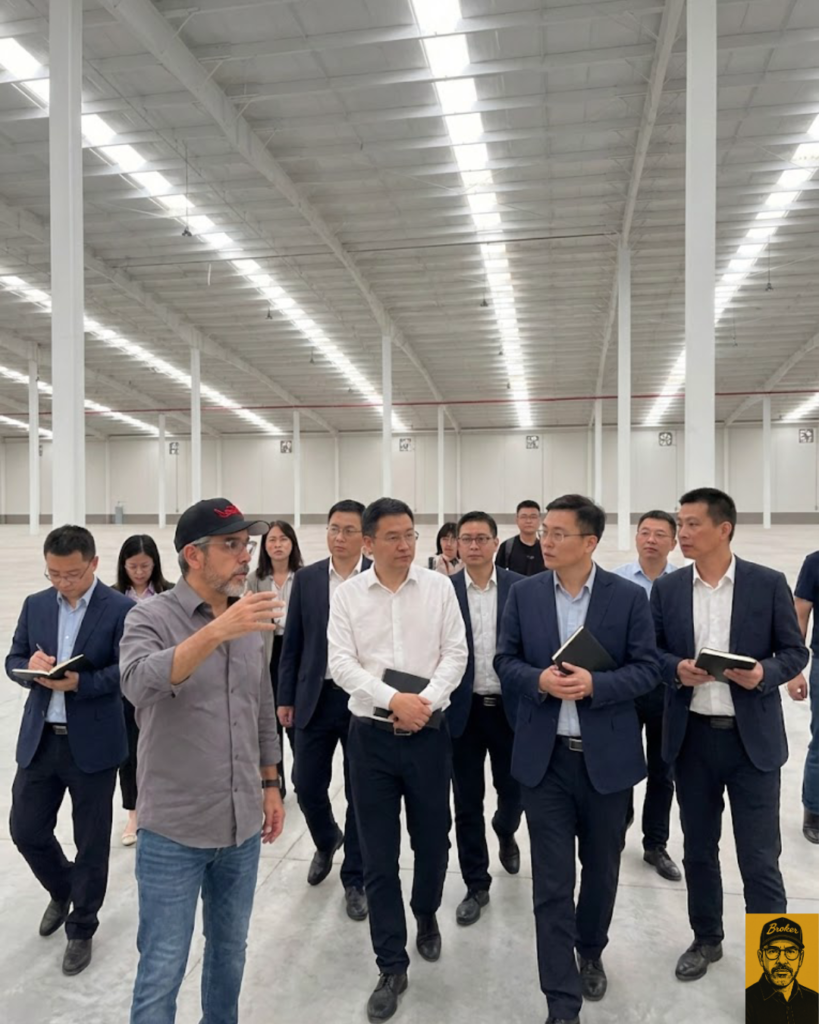
And that reality is reshaping industrial real estate in Mexico.
If you invest in land, spec buildings, build-to-suit projects, or sale-leasebacks, you need to understand why this moment matters.
Let’s start with the fundamentals.
- China imports between 75 and 80 percent of its energy.
- China imports close to 80 percent of the raw materials required to produce food.
- China is one of the largest food importers in the world.
- China imports most of the commodities required to manufacture the goods it exports.
Now add demographics.
When a country industrializes, birth rates usually fall. China also enforced the one child policy for decades. Today, the country is aging fast. There are more people above 53 than young workers entering the system.
If trade with the United States becomes unstable, pressure rises immediately.
- Less export revenue.
- The same dependence on imported inputs.
- An aging workforce.
- Slower internal consumption growth.
That combination forces global companies to rethink exposure.
When risk increases, companies respond in practical ways.
- They diversify production.
- They shorten supply chains.
- They reduce reliance on a single country.
- They place capacity closer to demand.
This is where Mexico enters the conversation.
- Mexico offers truck access to the United States in hours, not weeks.
- USMCA provides a stable trade framework.
- The labor base supports manufacturing and logistics operations.
- Industrial corridors such as Guadalajara continue to expand.
I see the shift directly.
Years ago, companies asked whether Mexico made sense.
Today, they ask how to secure space quickly.
But this is where discipline matters.
Opportunity does not guarantee returns.
- Not every piece of land works.
- Not every spec building leases.
- Not every industrial park has sufficient power capacity.
- Not every corridor supports the right labor profile.
You still need to validate the basics.
When I review a project, I focus on five filters.
Location
- Does the site reduce supply chain risk?
- Does it improve delivery time to the United States or key domestic markets?
- Is highway access aligned with freight patterns.
Infrastructure
- Is there confirmed power capacity?
- Is water available if the operation requires it?
- Are utilities in place today, not promised later?
Labor
- Is there sufficient workforce within 20 to 30 kilometers?
- Does the labor profile match the operation type?
Legal
- Is the title clean?
- Is zoning aligned with industrial use?
- Are permits realistic within the timeline?
Market
- Are rents supported by real transactions?
- Is tenant demand tied to actual expansion plans?
This moment favors investors who move with clarity, not noise.
China’s dependency on imports and export access creates pressure. U.S. trade dynamics influence that pressure. Global companies respond by spreading production and positioning capacity closer to their end markets.
Mexico benefits from that shift.
But only well-located, well-structured projects capture it.
If you are reviewing land, a build-to-suit, or a sale-leaseback and want to pressure test the thesis before committing capital, reach out.
A short conversation at the right time often changes the outcome of a project.
Execution defines who benefits from this window.